Seven mentors offer an assortment of half-day and full-day classes. Class descriptions, days and times, materials fees, and participant materials are listed below. View Saturday Classes and Sunday Classes below. A single registration fee includes 9 hours of instruction on Saturday and 3 hours on Sunday. When registration opens, participants will choose either one 6 hour or two 3 hour classes on Saturday, and one 3 hour class on Sunday.
Saturday Classes
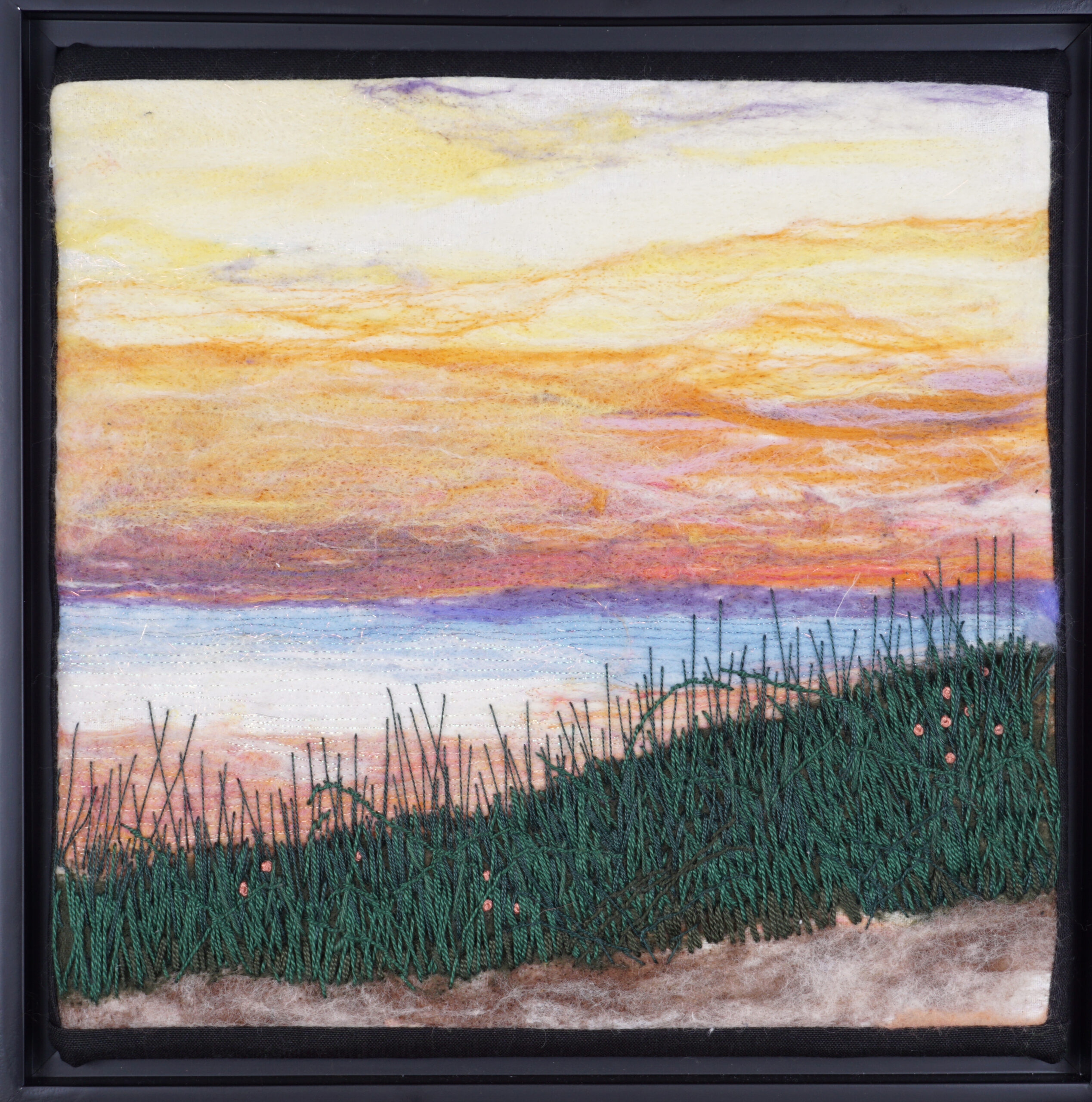
The Felted Landscape by Diane Cadrain
Saturday, 9:00 a.m. to 12:00 p.m. with break
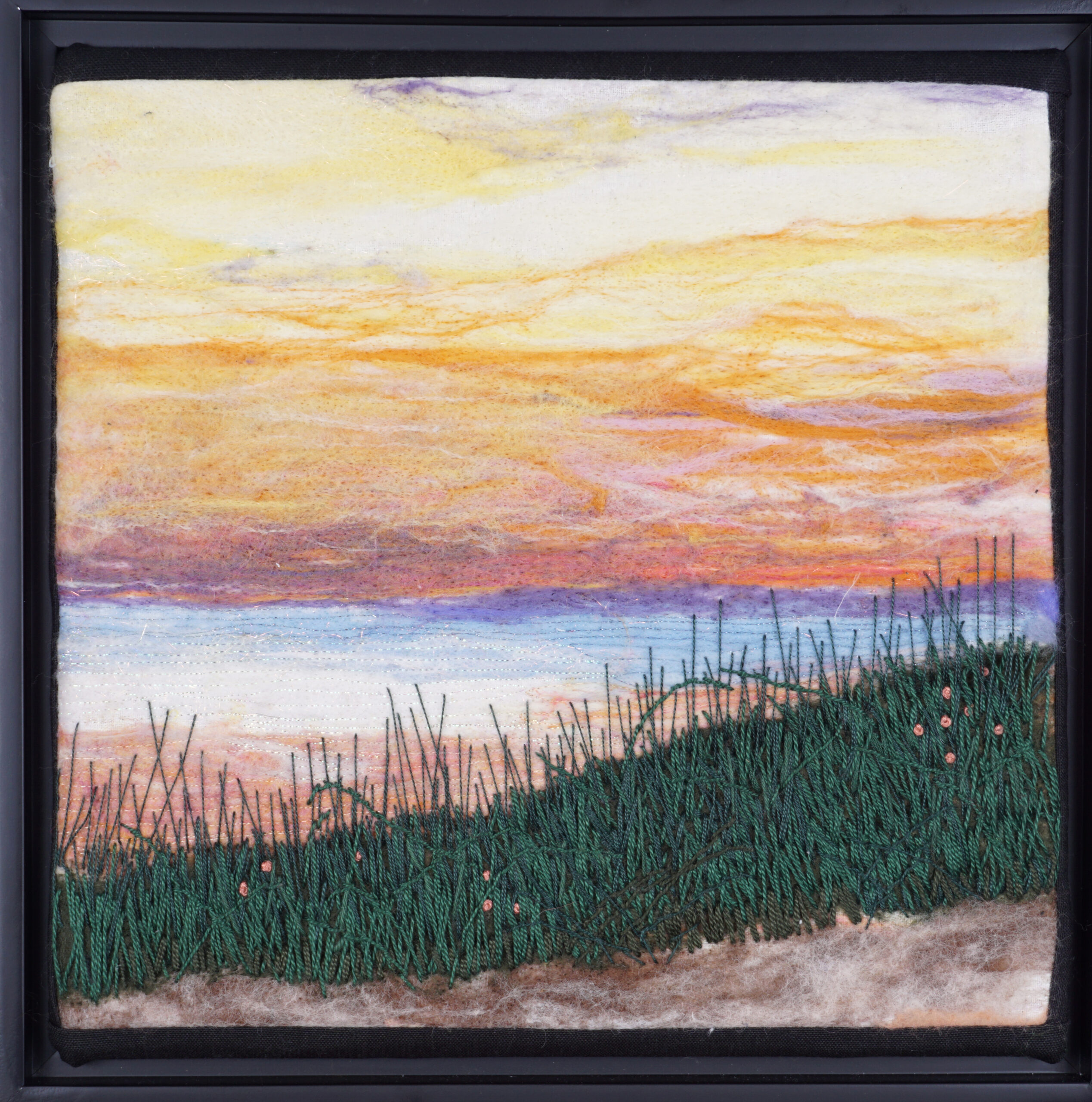
In this class, participants will use the softest of materials, wool roving, and a special barbed needle, to create an original felted work of art on a backing of raw silk. They will work from an image of a landscape, brought from home (preferably 8 x 10) or provided by the teacher. Beginners and beyond. This is the first of three sessions offered on this topic.
Materials: $20 fee payable to the instructor.
Students receive a firm foam pad (which the student may keep), a piece of raw silk, a piece of commercial felt as a backing, felting barbs, and merino wool in many colors and forms, including curly locks, short fiber, combed top, and embellishments such as nepps and Angelina fibers. Students should bring an image of a landscape they would like to use, preferably 8 x 10, or they may use an image provided by the teacher.
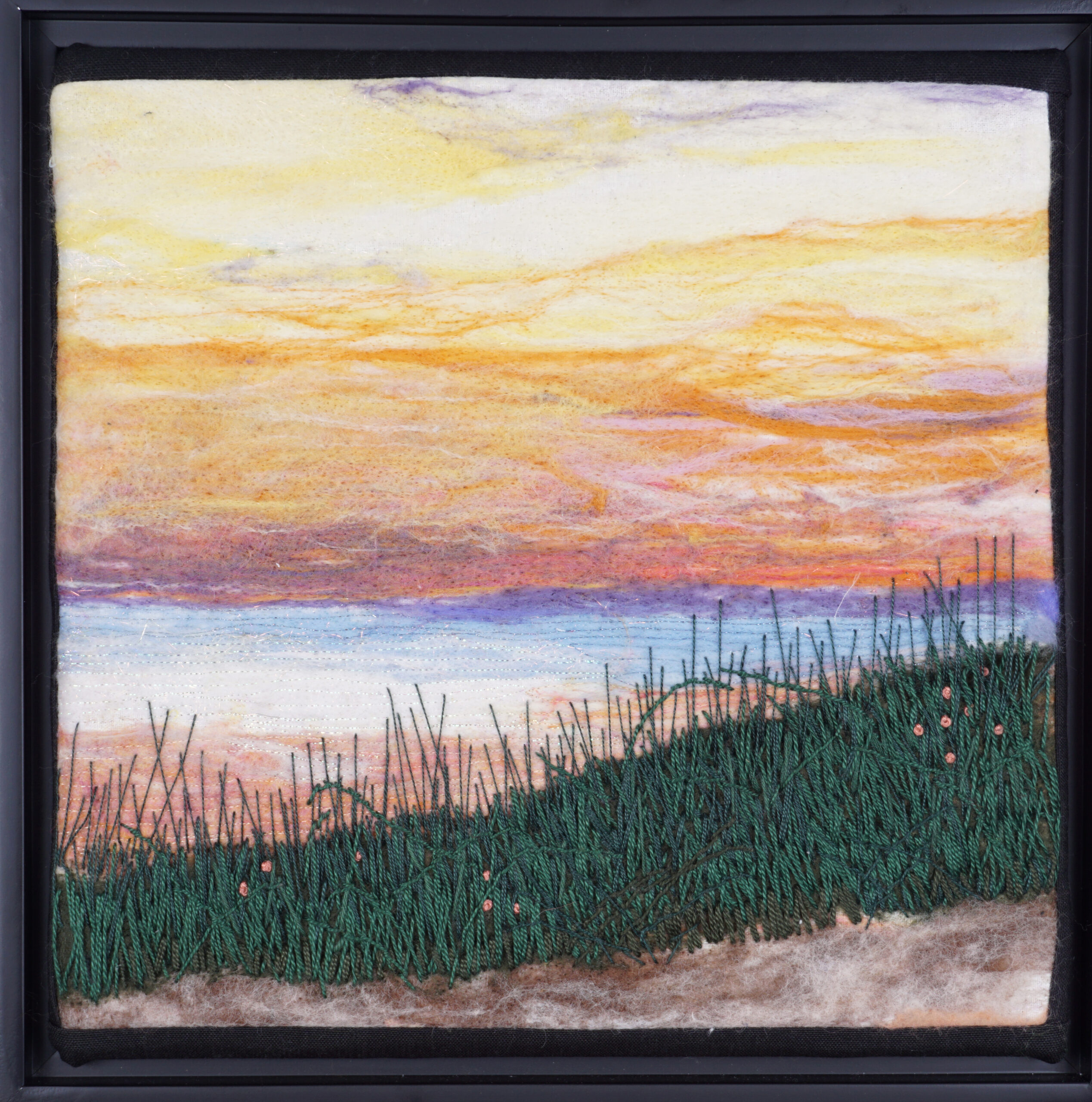
The Felted Landscape by Diane Cadrain
Saturday, 2:00 p.m. to 5:00 p.m. with break
In this class, participants will use the softest of materials, wool roving, and a special barbed needle, to create an original felted work of art on a backing of raw silk. They will work from an image of a landscape, brought from home (preferably 8 x 10) or provided by the teacher. Beginners and beyond. This is the second of three classes offered on this topic.
Materials: $20 fee payable to the instructor.
Students receive a firm foam pad (which the student may keep), a piece of raw silk, a piece of commercial felt as a backing, felting barbs, and merino wool in many colors and forms, including curly locks, short fiber, combed top, and embellishments such as nepps and Angelina fibers. Students should bring an image of a landscape they would like to use, preferably 8 x 10, or they may use an image provided by the teacher.
Spindle Clinic by Terri Drouin-Guerette
Saturday, 9:00 a.m. to 12:00 p.m. with break
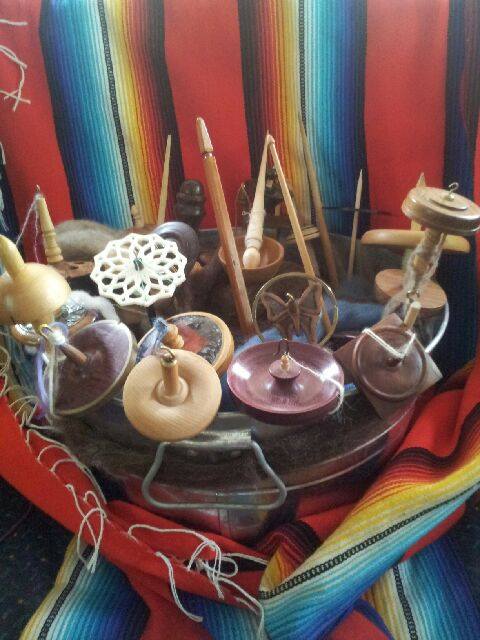
Most spinners, both new and experienced, have a spindle in their stash that gives them trouble. Or perhaps it is a particular fiber/spindle combination. Do you have a spindle that has been sitting idle because the two of you just don’t seem to get along? Bring your spindles, the ones that you love and the ones that you hate, and whether you’ve lost the magic or never actually found it in the first place; our goal is to bring the Spindle Magic into your spinning!! Included in the workshop will be discussions and demonstrations of various types of spindles, drafting and plying methods and spindle care. The Spindle Clinic is sure to have something for everyone!
Materials: $20 payable to the instructor. Participants will receive handouts and fiber. Participants should bring note taking supplies and a spindle, preferably one that you would like to learn more about.
Fractal Spinning for Your Odds and Ends by Terri Drouin-Guerette
Saturday, 2:00 p.m. – 5:00 p.m.
Fractals are never ending patterns found in nature, mathematiccs, and art. They
repeat themselves at different scales or sizes. Fractal yarns are usually created
from dyed combed top. However, what if you have separate sources of fiber
(i.e, samples from workshops, le over fiber from other projects, etc.)? In this
workshop, we will explore how to create a fractal yarn from a variety of fiber
sources.
Instructor will have a few pieces of equipment (i.e., niddy noddies, nostepinnes)
for participants to use during the workshop.
Materials: $20 payable to the instructor. Participants will receive handouts and fiber.
Spin the World by Gigi Matthews
Saturday, 9:00 a.m. – 5:00 p.m. with lunch and breaks
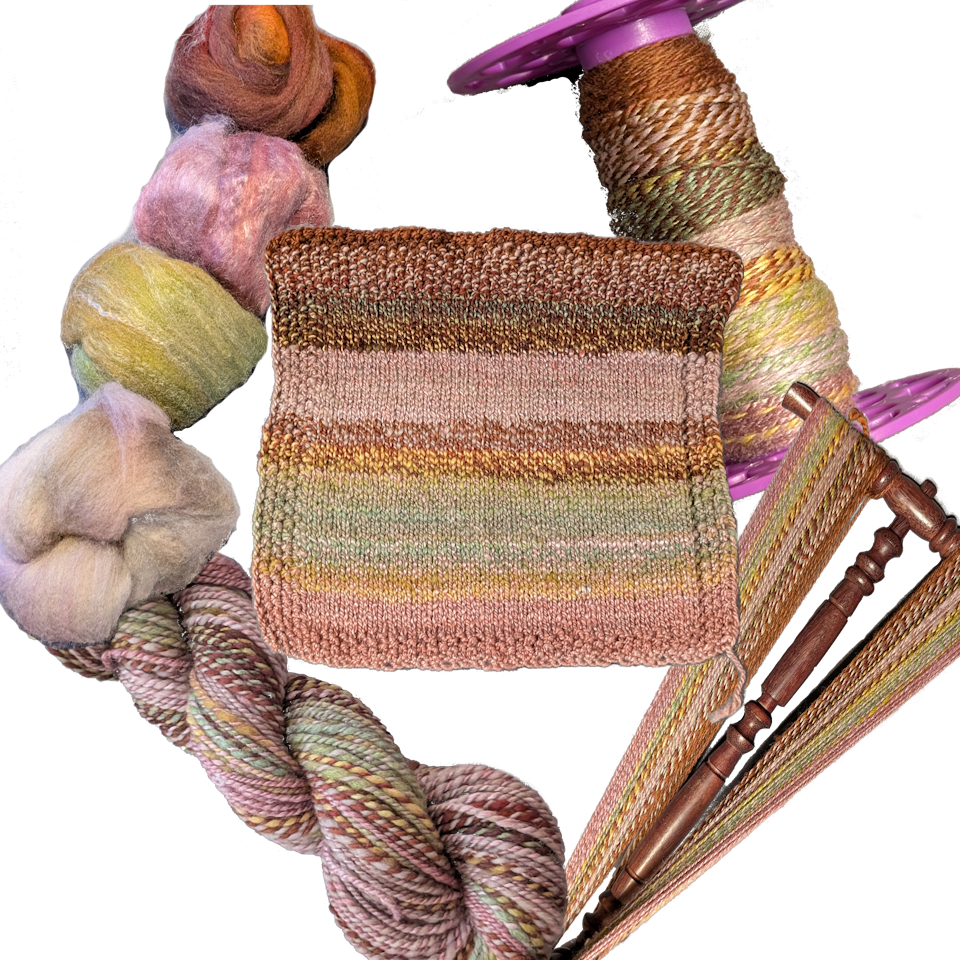
Take an armchair trip around the world by spinning with a smorgasbord of fibers from all over the globe! Instructor Gigi Matthews has been to 33 countries and we will spend the day visiting many of them, traveling across Europe, down through Turkey, Syria, and Jordan, across to the Far East, Australasia, and down through North America and the Caribbean. As we go, we’ll learn about the textile traditions of these countries and create a yarn and fiber sampler for future reference. Advanced beginner and beyond.
Materials: $50 payable to the instructor. Students will receive fibers to spin from around the world. Participants must bring their own spinning wheel/spindle/e-spinner and be able to spin a single.
Spinning Hankies by Amy Tyler
Saturday, 9:00 a.m. to 12:00 p.m. with breaks
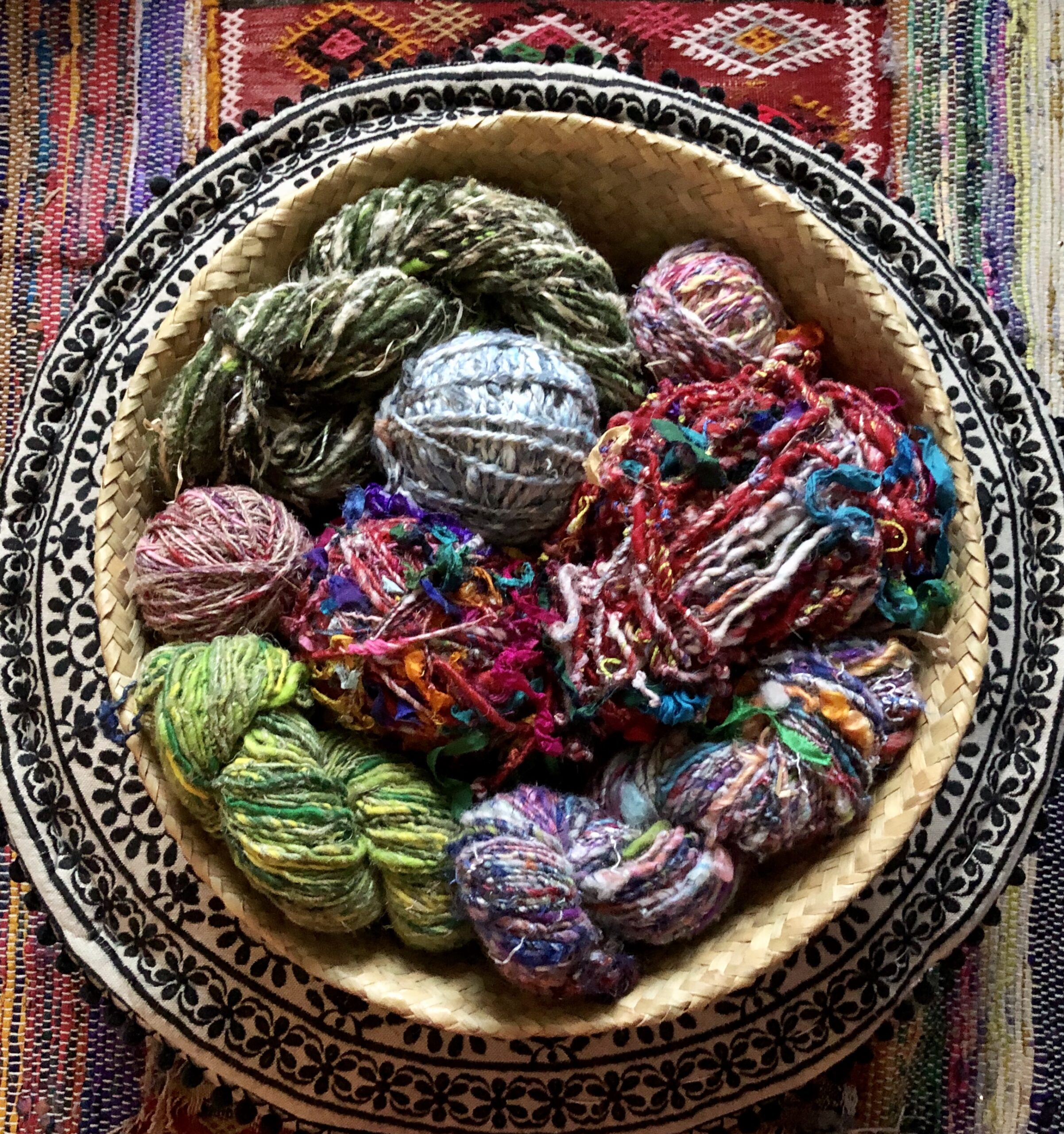
Silk hankies are a “mawata” silk that consists of very thin layers of silk squares. We will learn strategies for preparing these hankies for spinning, and then we will spin them using various strategies including chain plying. We will cover strategies for making your hands smooth to minimize snagging of silk on your hands, and various uses of silk hankies and yarns spun from them. Intermediate spinners.
Materials: $20 fee payable to the instructor. Participants will receive samples for examination, fibers for spinning, notebook with handouts, and sundry supplies. Participants should bring a spinning wheel in good working order, 3 bobbins, and a lazy Kate.
Plying Balanced Yarns by Amy Tyler
Saturday, 2:00 p.m. to 5:00 p.m. with breaks
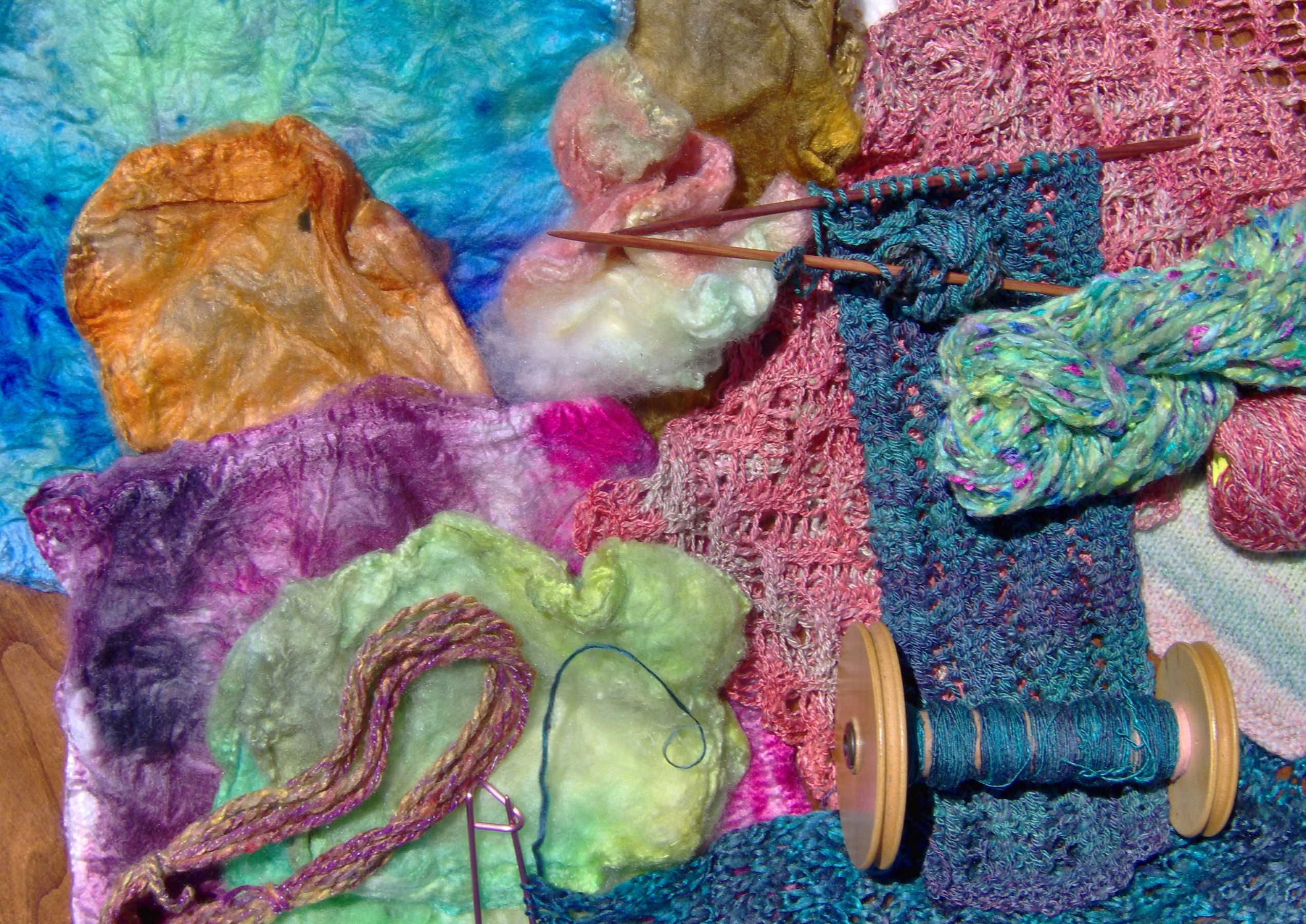
Consistent and even plying is as important to a high-quality, hand-spun yarn as is the spinning of singles. Matching the twist in plying to the twist in the spun singles is the key. In this workshop, we will cover issues related to controlling tension on the singles while plying and the amount of twist in both spinning and plying. We will practice techniques for plying from one source (Andean plying, chain plying), and from two or more sources.
Materials: $15 payable to the instructor. Materials fee covers samples for examination, fibers for spinning, notebook with handouts, and sundry supplies. Participants should bring a spinning wheel in good working order, 2 bobbins partially filled with Z-spun singles plus 1 empty bobbin, and a Lazy Kate.
Don’t Leave Home Without it Tote by Mary Ann Williams
Saturday, 9:00 a.m. to 5:00 p.m. with lunch and breaks.
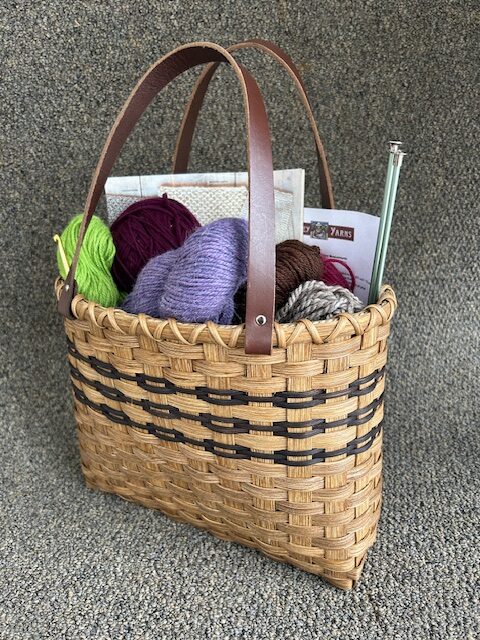
This basket is the perfect companion for the fiber enthusiast on the go—ideal for shopping or for carrying your current project when you’re out and about. Measuring approximately 12” L x 3” W x 10” H (not including the leather handles), it’s both functional and easy to carry. In class, participants will learn how to lay out a filled base, weave the sides using a patterned combination of dyed and natural reed, and then rim and lash their basket.
Materials: $50 payable to the instructor. Participants will receive a written pattern, natural and dyed reed, seagrass, leather handles as well as use of the basketmaking tools needed to complete the basket. Participants should bring a hand towel.
Getting to the Root of the Madder & Other Red Dyes by Jane Woodhouse
Saturday, 9:00 a.m. to 5:00 p.m. with breaks and lunch
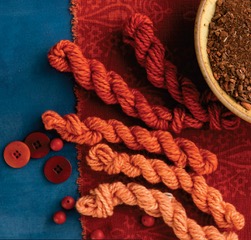
Students work wool using four red dyes: cochineal, madder, lac and brazilwood in varying strengths to get a range of gorgeous red hues. In addition there will be baths that take advantage of acid vs alkaline assistants to shift color a trait particularly pronounced in the red dyes. Suitable for advanced beginners to advanced spinners.
Materials: $30 payable to the instructor – The fee covers yarn, dyes and dye assists, folder with notes and recipes. Participants should bring an Apron (optional), rubber gloves, scissors, black Sharpie marker, and masking tape.
Flax, Yesterday’s Fiber for Today by Patsy Sue Zawistoski
Saturday, 9:00 a.m. to 5:00 p.m. with breaks and lunch
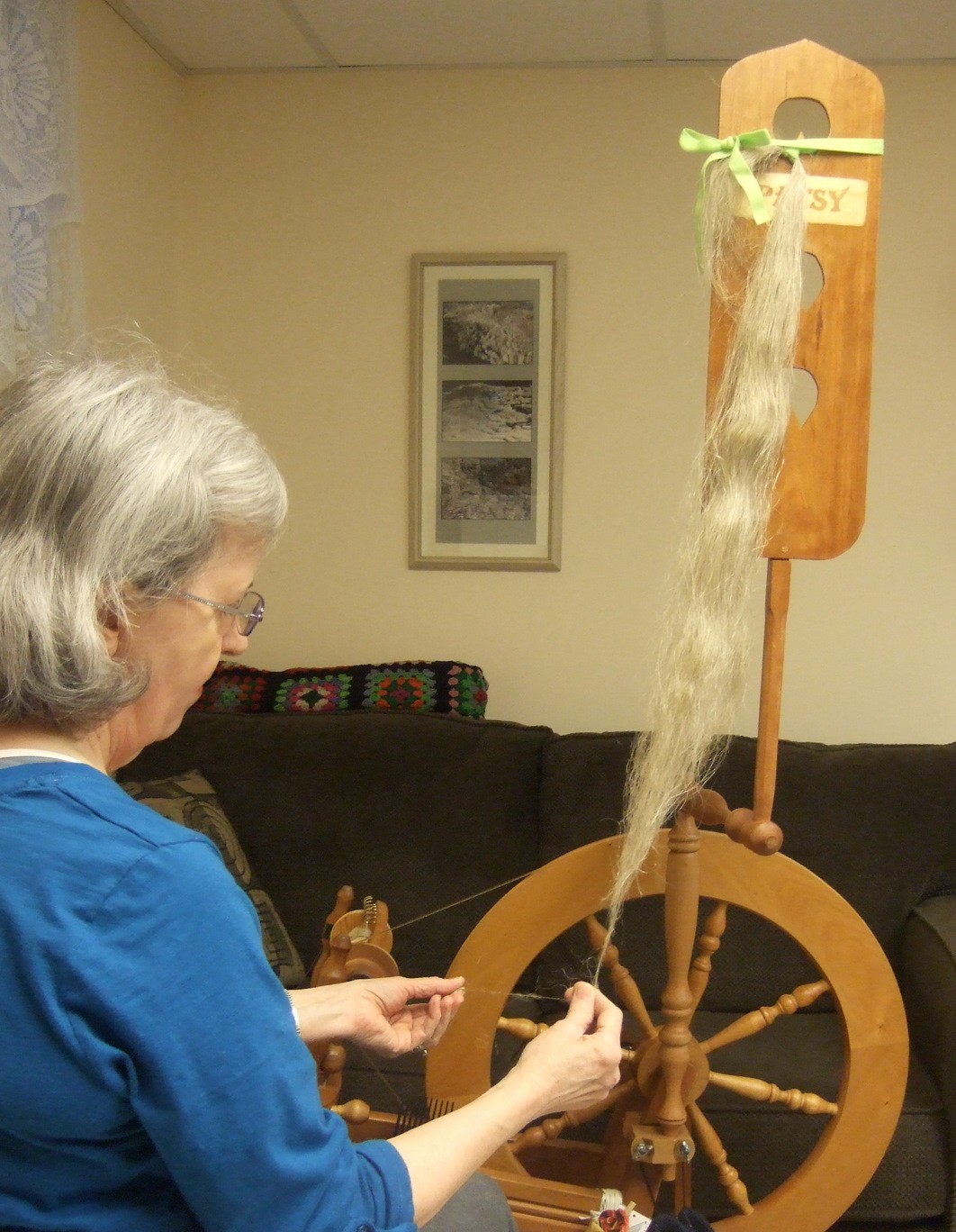
Flax is the classic, historic fiber that spins into linen yarn. It will easily become another spinning joy after you learn new techniques to manage its characteristically long fibers. This class teaches you quick ways to dress distaffs with long, line flax; wet-spin line or roving; and scour finished yarns. Fibers are provided. Bring a spinning wheel or spindles, hand comb, and a “distaff.” Distaffs can be easily improvised, antique, or manufactured styles attached to your waist, your chair, your wheel, or free-standing. I will email students some creative distaff instructions as class time nears. Students do not need experience with flax, but must be comfortable with their wheels and tools, and should be intermediate to advanced spinners.
Sunday Classes
The Felted Landscape by Diane Cadrain
Sunday, 9:00 a.m. – 12:00 p.m. with break
In this class, participants will use the softest of materials, wool roving, and a special barbed needle, to create an original felted work of art on a backing of raw silk. They will work from an image of a landscape, brought from home (preferably 8 x 10) or provided by the teacher. Suitable for beginners to advanced. This is the third of three sessions offered on this topic.
Materials: $20 fee payable to the instructor. Participants will receive a firm foam pad (which the student may keep), a piece of raw silk, a piece of commercial felt as a backing, felting barbs, and merino wool in many colors and forms, including curly locks, short fiber, combed top, and embellishments such as nepps and Angelina fibers. Students should bring an image of a landscape they would like to use, preferably 8 x 10, or they may use an image provided by the teacher.
Blending Board Techniques by Terri Drouin-Guerette
Sunday 9:00 a.m. – 12:00 p.m. with break
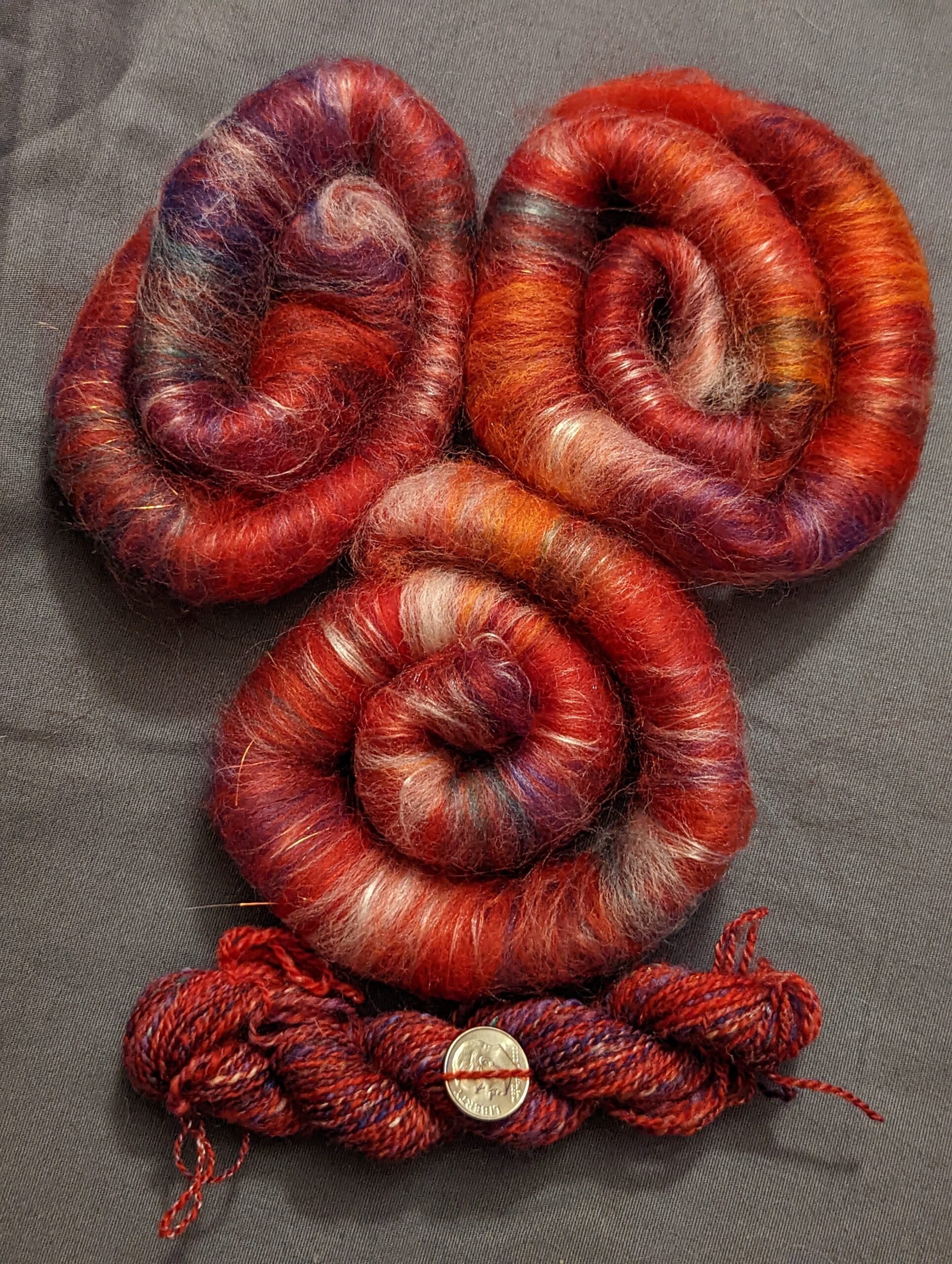
Are you intrigued by the possibilities that a blending board opens up but don’t know where to start? Would you like to see what you can accomplish before committing to buying your own? Or maybe you have played around with your blending board and would like to explore some new options. In this workshop, we will start with the basics of applying and removing fiber and the care and cleaning of your blending board. We will then move on to some of the more interesting things we can do with blending boards, such as making matching batts, striping, garneting, etc. This class is suitable for all levels.
Materials: $25 payable to the instructor. Participants will receive fiber, additional blending board supplies, and handouts. The instructor will have a limited number of blending boards available for participants to borrow during the workshop. However, the instructor’s boards must be reserved in advance, at least one week prior to The Gathering.
Yoga and Spinning: An Awareness by Gigi Matthews
Sunday, 9:00 a.m. to 12:00 p.m. with break
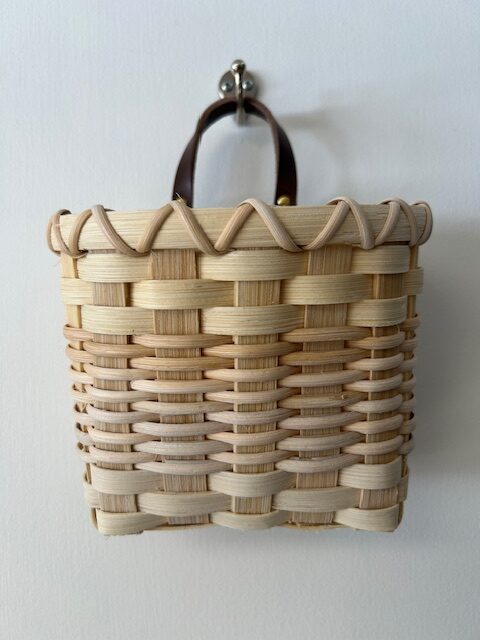
The ancient craft of hand spinning is the foundation of the fiber arts. Spin your way down the millennia by learning to use a spindle to make yarn. Discover the history of spinning and the types of fibers used traditionally around the world. We will work with wool from rare breed sheep and plant fibers such as flax and hemp. Throughout the morning, while getting the knack of spindle spinning, we will learn chair yoga poses that are suited to all body types and abilities; if you can breathe, you will be able to do this extremely gentle and breath-based style of yoga that helps to improve and maintain good posture. Spinning is a meditative craft, well suited to yoga and its philosophy of mindfulness. No equipment needed; wear comfortable clothing. Suitable for advanced beginner to advanced spinners.
Materials: $30 payable to the instructor. The materials fee for Spinning & Yoga includes a spindle, flax, and 3 different types of wool. Participants do not need to bring any tools or fiber; everything is included in the materials fee and is theirs to bring home.
Spinning Marl Yarns by Amy Tyler
Sunday 9:00 a.m. to 12:00 p.m. with break
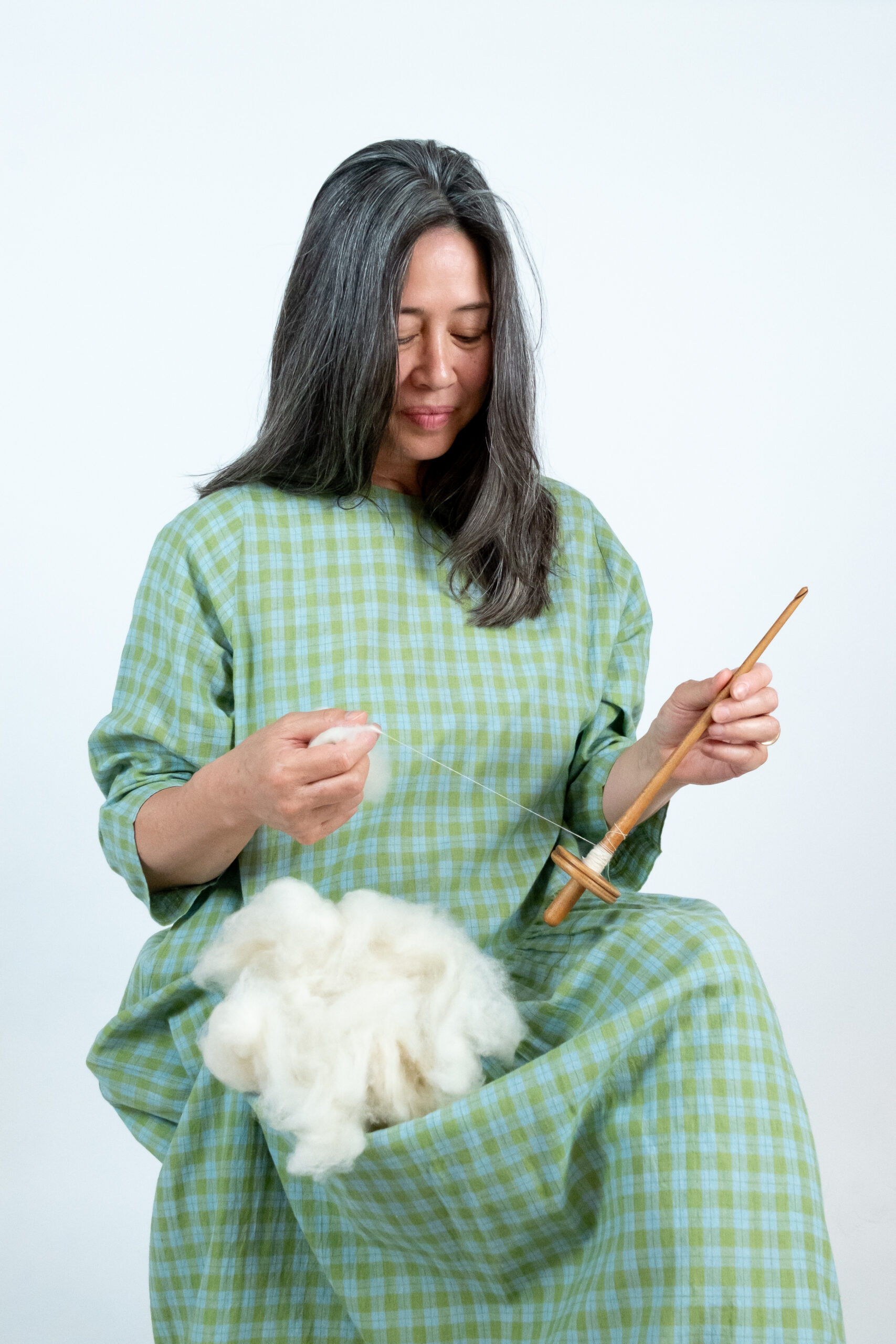
Marl yarns are often defined as plied yarns in which the plies are different colors. We’ll cover techniques for making those yarns, as well as making marl yarns in which the plies are from different fiber sources. In the process, we’ll also cover strategies for controlling thickness and twist of singles and for plying to create 2 and 3-ply balanced yarns. Advanced beginner to intermediate spinners.
Materials: $20 payable to the instructor. The materials fee covers samples for examination, fibers for spinning, notebook with handouts, and sundry supplies. Participants should bring a spinning wheel in good working order, 4 bobbins, and a Lazy Kate.
Odds and End Keeper Basket by Mary Ann Williams
Sunday, 9:00 a.m. to 12:00 p.m. with break
Need a small basket to help keep your workspace organized and neat? This one is just right. Measuring approximately 5.5” W x 3” D x 6” H (not including the leather handle), it’s an ideal size for holding frequently used craft tools, everyday desktop supplies, keys, and other small essentials. Participants will learn how to lay out a filled base, weave up the sides using two different sizes and types of reed, and finish the basket by rimming and lashing.
Odds and Ends Keeper Basket by Mary Ann Williams
Sunday, 9:00 a.m. to 12:00 p.m.
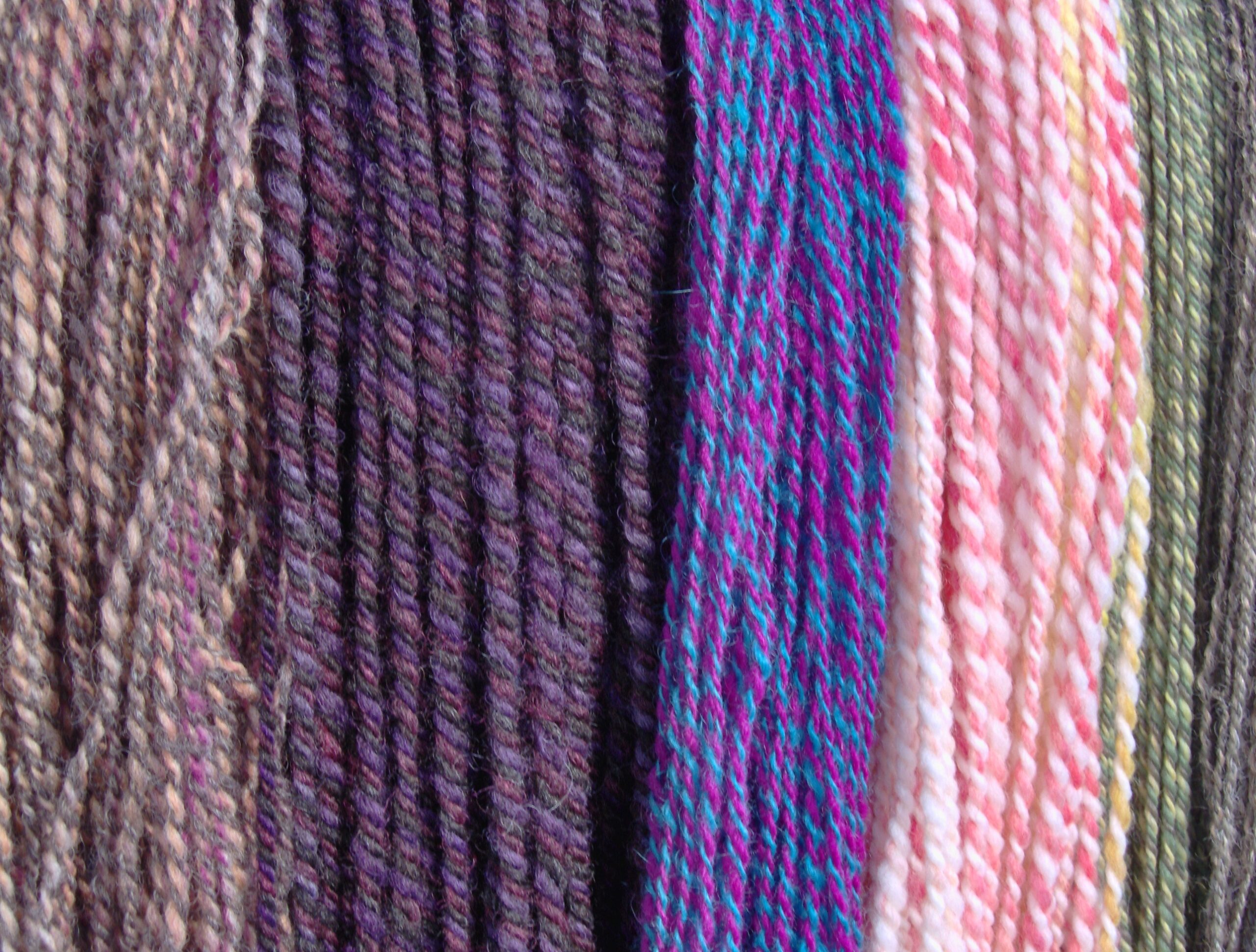
Need a small basket to help keep your workspace organized and neat? This one is just right. Measuring approximately 5.5” W x 3” D x 6” H (not including the leather handle), it’s an ideal size for holding frequently used craft tools, everyday desktop supplies, keys, and other small essentials. Participants will learn how to lay out a filled base, weave up the sides using two different sizes and types of reed, and finish the basket by rimming and lashing. Suitable for all levels.
Materials: $22 payable to the instructor. Participants will receive a written pattern, natural reed, seagrass, leather handle as well as use of the basketmaking tools needed to complete the basket. Participants should bring a hand towel to class.
Portfolios by Jane Woodhouse
Sunday, 9:00 a.m. to 12:00 p.m. with break
This class is for the those who want to organize and display their samples of yarn or handwoven, knitted or felted cloth. Come and explore some book based structures to keep your work documented and in order. A bag of dyed yarn samples is only useful if you have it cataloged and labeled. Use these structures to add interest and creativity to your work and keep yourself engaged in that work. This class will look at some very simple structures and spend the major part of the class putting together a pocketed structure that can store dyed yarn samples or cloth samples for easy reference. This class is suitable for any level spinner.
Materials: $20 payable to the instructor. Participants will receive papers, rivets, thread, needles to create a portfolio. Participants should bring Scissors, pictures, rubber stamps and pads, interesting pieces of cloth or heavy papers. Small portable sewing machine (optional).
Spinning Hemp and Ramie by Patsy Sue Zawatowski
Sunday, 9:00 a.m. to 12:00 p.m. with break
Hemp and ramie are important historic cellulose bast fibers. They frequently move in and out of fashion. Now that they are back, it’s time to fully appreciate and understand the differences between these two fibers. We will spin and ply them separately and together. Suitable for Intermediate to Advanced Spinners.
Materials: $12 payable to the instructor. Participants will receive a 15-page booklet, natural, and dyed roving. Participants should bring a spinning wheel in good working order or a variety of spindles, lazy kate, extra bobbins, hand cards, hand towel, scissors, and about a six sandwich baggies, and 3X5 cards. Also bring oil, screwdriver, and other tools for your wheel, in case they are needed.